Tuesday, February 28, 2006

Cattle next door

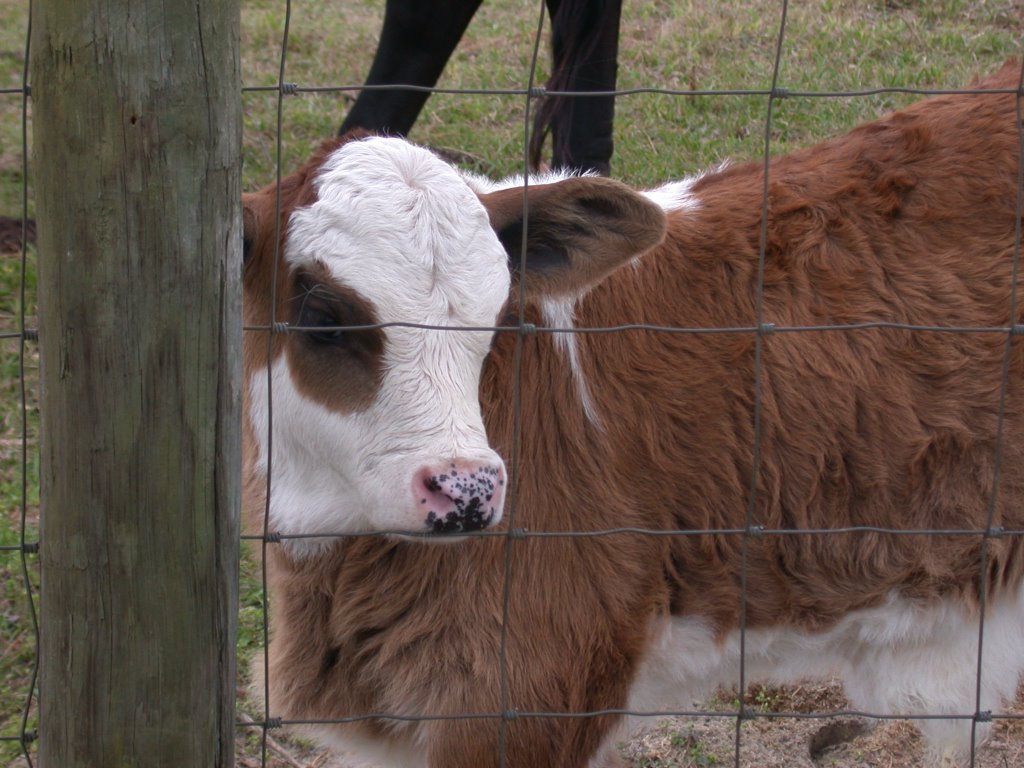
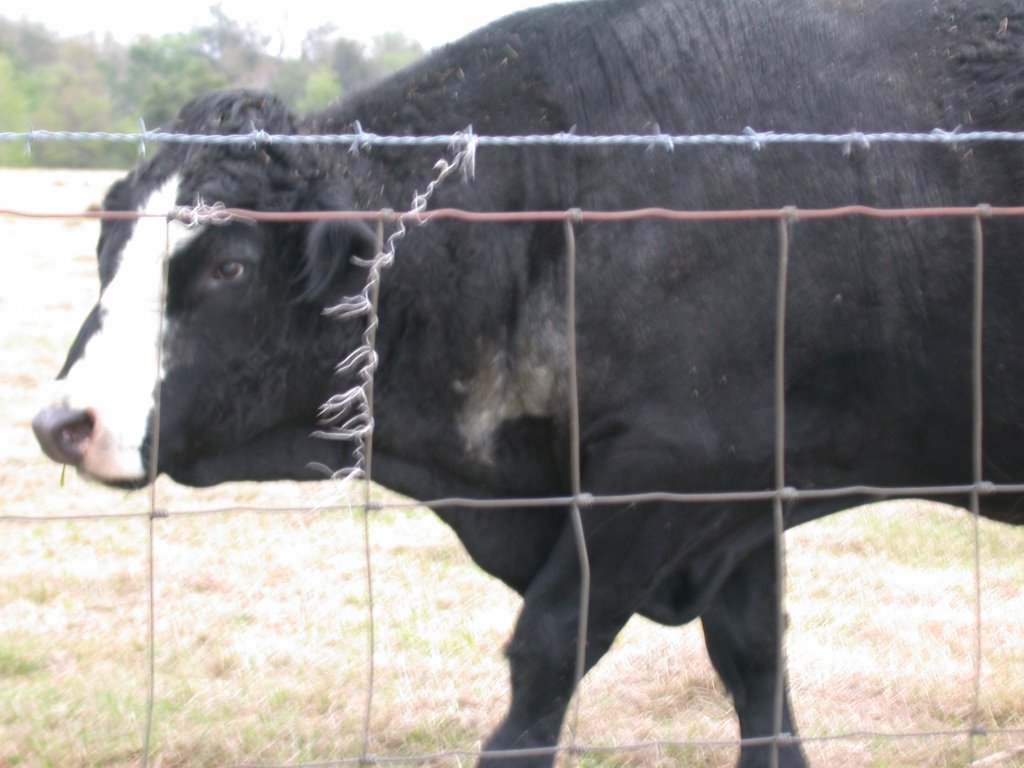
My next-door neighbor keeps some cattle. He has ten mama cows and a bull. He practices no management whatsoever. The bull is in with the cows year around.

This is not meant as a criticism, it’s none of my business how he manages his stock and this is the system he has chosen. John (the neighbor) is a real nice guy.

Last summer John allowed me to turn my two heifers in with his herd to get them bred. I just installed a gate in our common fence and led them over.

His bull is a good one, and this saves me the trouble of having a bull of my own or making other arrangements like AI.

It saves John the trouble of having another bull on the other side of the fence. The two bulls would walk the fence, dig holes in the sand, and try to break through the fence and fight with each other.
This was the situation for years when the previous owner of my place had his own bull.

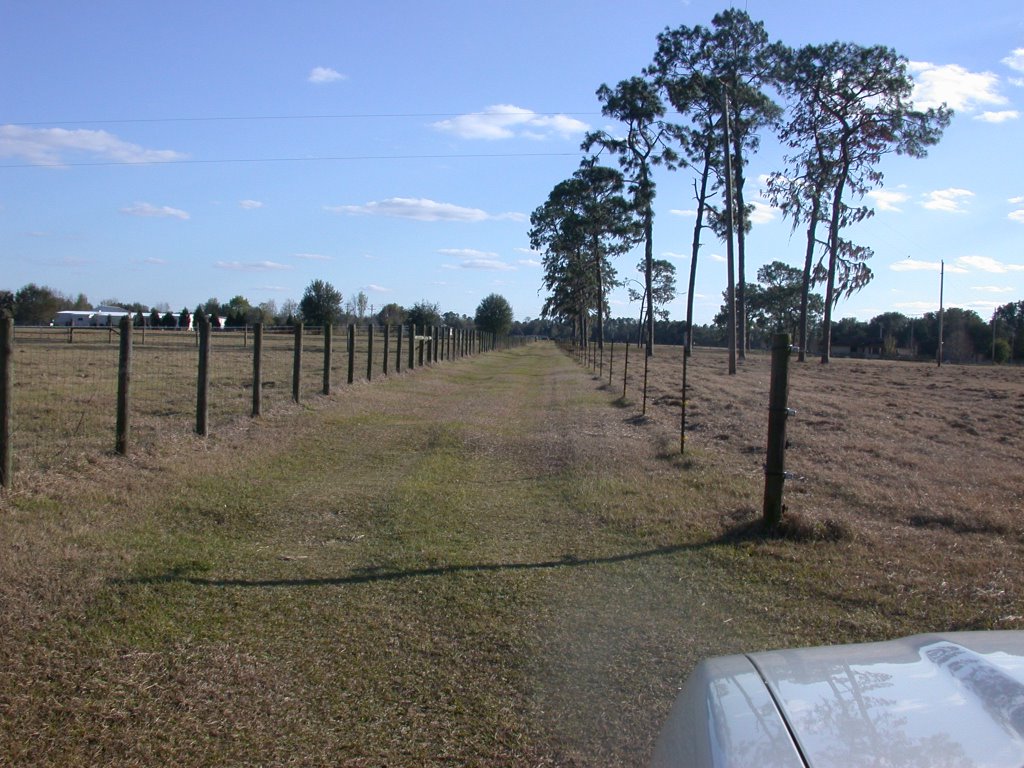
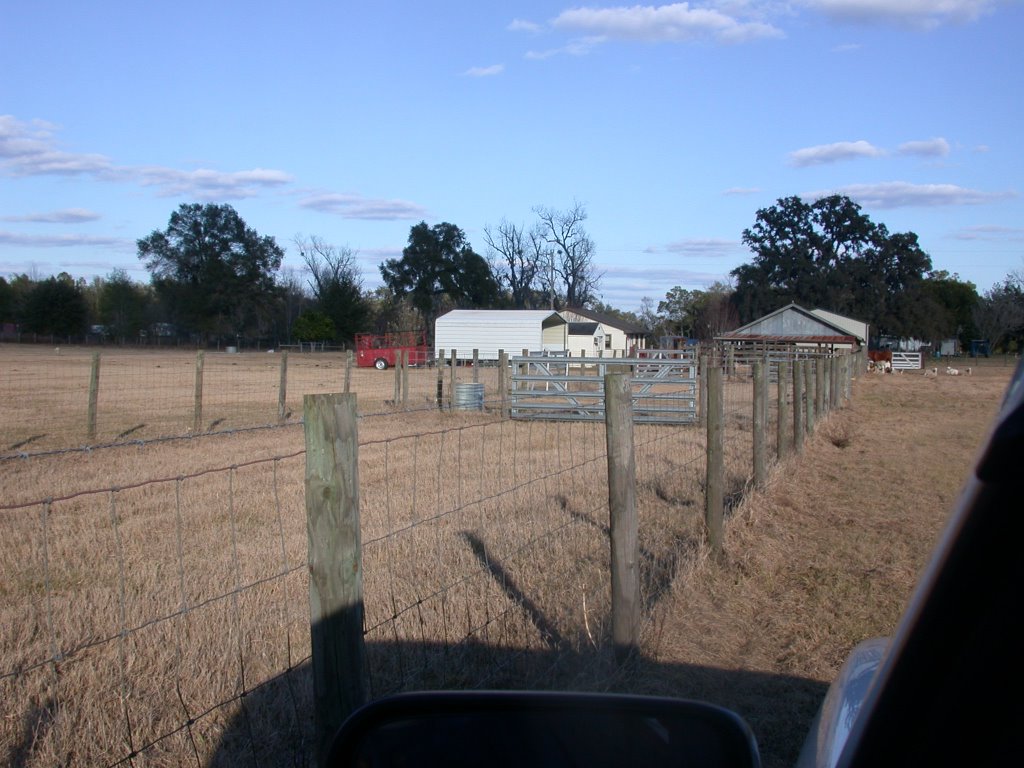
Part of our property boundary is the lane that gives us access to our barn and outbuildings, as well as mamas house. Since I go down the lane every day I get to witness the calf races and other games they play when they are still young and cute.

Monday, February 27, 2006

Chicken Crates

The weather was sloppy here for most of the weekend so I put off my plan to get the garden plots ready to plant and shifted to puttering around in my little workshop to entertain myself.

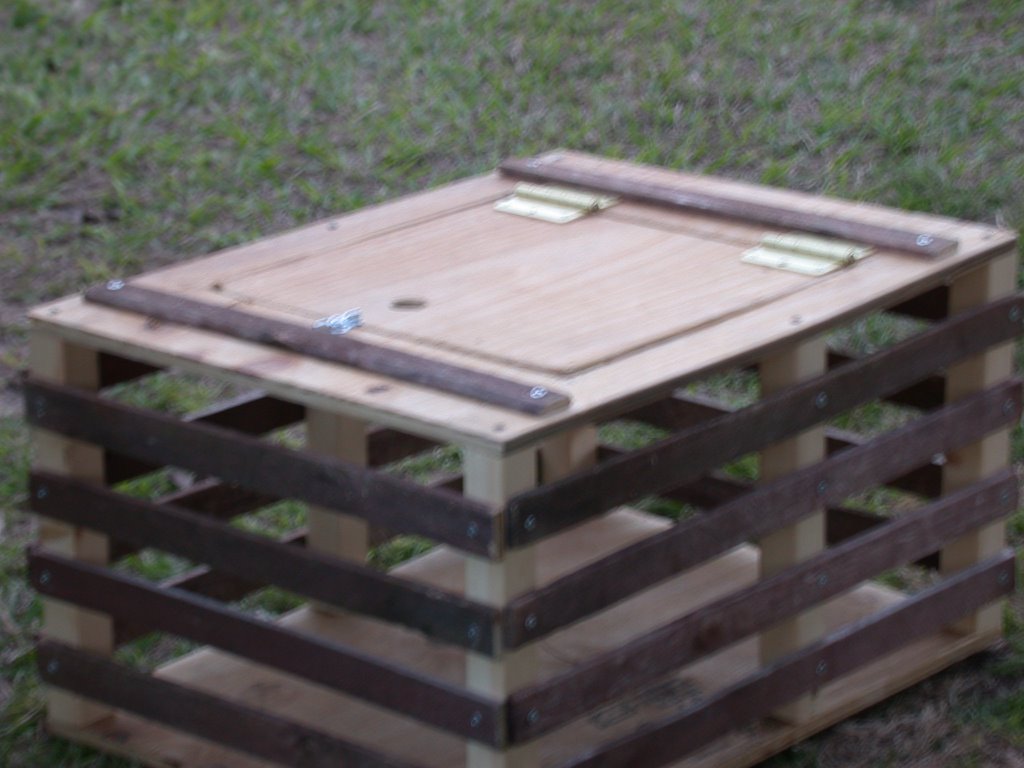
I had come across an article on home made chicken crates a long while back on the APPPA web site. I thought they looked cool, but I had two problems with them.

1) I don’t have any lath strips and don’t know where to get any. The lumberyard doesn’t carry them and have no source for scrap.

2) These are too big for me to carry. They are fine for most folks, but I wanted something I could carry in my lap. I need my hands to push the wheelchair.

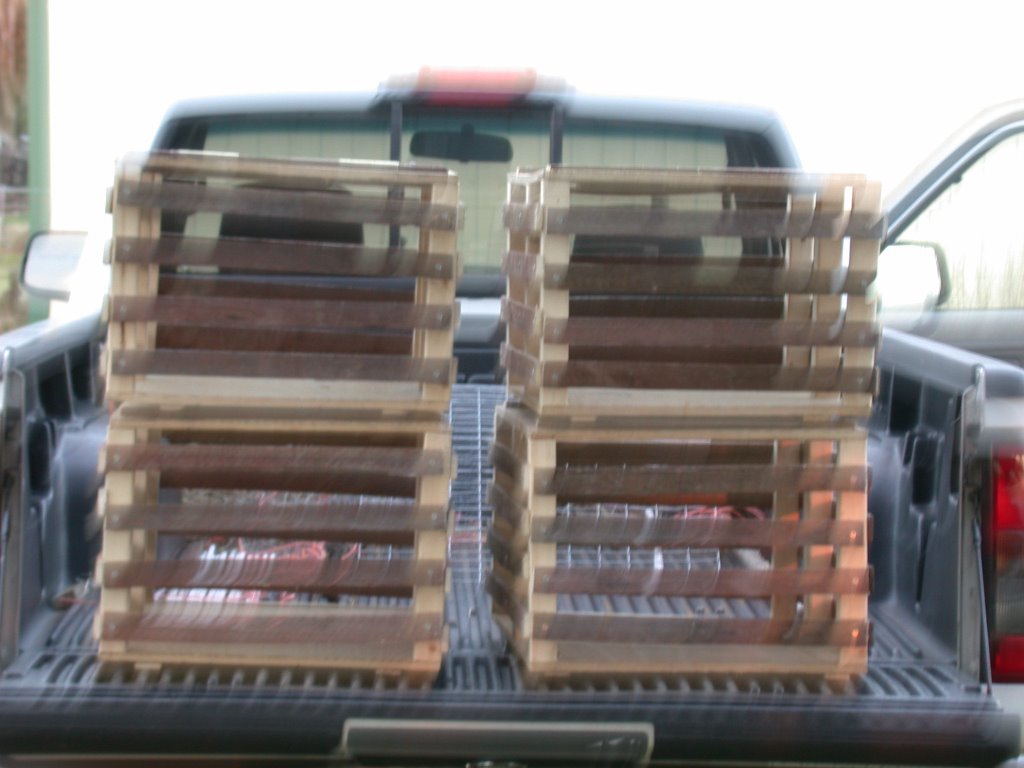
I had some old snow fence that I reclaimed from the chicken pen in my garden, so that was my source for lath strips. I modified the plan so that instead of building them 2’ x 3’ I built them 2’ x 18”.

Anyone who has seen the sort of carpentry work I do will immediately recognize this as my work; note the extensive use of the 87 degree angle :-).

Friday, February 24, 2006

Spring Garden

A little while back I moved my laying hens out of my garden spot. I had a very small garden spot last year that mostly died of neglect.

Here’s the plan for this spring. Instead of fooling with vegetables for the kitchen I’m going to experiment with growing feed for the sheep. I bought some corn seed, an open pollinated variety called “Reid’s Yellow Dent”. I also bought some Cow Pea seeds.

Cow Peas, AKA “Southern Peas”, are sometimes raised for livestock feed in this area. In the past they were a staple. I choose them because they don’t need a lot of store bought chemical inputs, the better the soil the better they grow I’m told, but they tolerate just about everything, so they will likely deliver a tolerable yield no matter what the weather does.

I’ve been told this by more than one local over the age of 75. I like to listen to the old folks, they know stuff I’d never be able to guess, and there willing to share what they know.

Former chicken yard, future garden spot

Just as an experiment I intend to double crop the corn and peas, that is, put cornrows about 30 inches apart then put the peas right down the middle of the rows.

This is all going to be on a very small scale of course. If it shows promise I can plant more next year.

One of the reasons I am interested in these crops is that I think I can get the sheep to harvest them for me. The plan is to just let them dry in the field at the end of the growing season.

Next fall when it’s time to flush the ewes before turning the rams in I can rig some electric fencing to give them access to a small strip at a time. My guess is that they will clean it right up.

It will be time to plant here in the next few weeks.

Thursday, February 23, 2006

Pear Tree

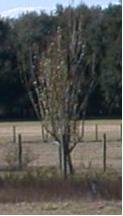
All of the sudden I noticed leaves on the pear tree.

Now I don’t inspect the pear tree on a regular basis, and here in the deep south lots of trees don’t even loose all there leaves at any one time.

Even so, the pear tree in the back yard is bare during the winter. It gets its leaves back at the first sign of spring, before most other trees.

Same Tree about 10 days earlier

So to all my friends way up there in those tiny little nosebleed latitudes, there is hope! Spring has to come through me to get to you. It’s coming!

Wednesday, February 22, 2006

Nature is strange

We had a freeze last week, the first real freeze of the year. I define a freeze as temperatures low enough to cause ice in the dog’s water bowl. We have had three or four frosts before this but this was the first freeze.

The pastures here are mostly Bahaia and Bermuda grass, both warm season grasses. These don’t grow so well in the shade, so under the trees the growth is more cool season stuff, weeds really.

This place has been a cattle farm for years and years. All through the hot Florida summers, the cattle would lounge under the trees. They ate anything good into extinction and overloaded the soil there with nutrients.

The freeze last week just barley qualified as a freeze. I broke the ice in the dogs dish with one finger, it was less than an eighth of an inch thick. The weather had been warm before the cold front came through and we had some rain. Things had started to green up slightly.

All this has been background leading up to this picture.

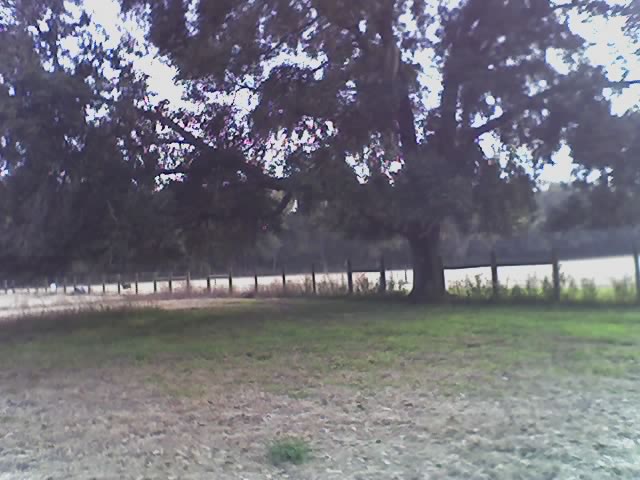
That is not a shadow under the tree. It is the only green spot in the pasture. It seems that the tree cover held in just enough warmth to protect this patch from freezing. This picture shows it closer up.

Sorry that these pictures are not the best, I took the picture with the little camera in my mobile phone instead of the good (or at least better) camera.

Can you say "microclimate"?

Friday, February 17, 2006

Economies of scale and the environment of risk

I’ve been fooling around with laying hens longer than any other stock on the farm, but never had very many at any one time. At the moment I’m down to seven hens. From time to time I’ve sold some eggs, but for the most part I just give them to friends and neighbors, or mama gives them to people from her church.

With almost no extra work I could be raising many times that number of birds. I’m considering ordering a straight run batch of 25 brown egg birds. Maybe White Rocks. I’d keep the best roster and eat the other cockerels.

We already have more eggs than we can eat. Sometimes it is even difficult to give them all away.

Establishing a customer base for small-scale egg production is possible of course. I know a few people that have done it locally, but there is more to it than producing eggs. It is necessary to find some way to attract and deal with customers without getting noticed by “officialdom”.

Now please don’t get the wrong idea, I have a very good relationship with the USDA as well as with the Florida Department of Agriculture and Consumer Services. The best thing about this relationship is that neither of these organizations knows that I exist. Seeing as how this insures that I get everything I want from these folks, I’m reluctant to change things.

I’ve never seen an “Eggs for Sale” sign at the end of a farm driveway around here. I know farms where you can indeed buy eggs, but there is no sign. People who sell pot are more open about what they do.

Florida is typical of any State in the union. If you were foolish enough to go to the capital to find out what was needed to comply with the relevant rules and regulations you would soon discover that the whole alphabet soup of organizations and departments have at hand and endless stream of instructions on how you are to live you life from moment to moment. The rules say that the same activity is at once mandatory and forbidden. If you toss great sacks full of money to the right lawyers, the way can be cleared so you can do more of less as you please.

I was looking at a web site just now where it is possible to look up Florida laws. It seems that Chapter 583 of the 2005 Florida Statues may have something to do with this subject. It is titled “CLASSIFICATION AND SALE OF EGGS AND POULTRY” and is, if I may say so, a truly impressive document. A little over half of it is taken up with definitions that remove any and all possible ambiguity from every term I’ve ever heard that relates to poultry and egg production. The rest of the document uses these same terms in a way that somehow has no meaning what so ever.

It is tempting to become angry or at least frustrated with this state of affairs. Tempting but useless. I’m coming around to the realization that this sort of thing is just part of the environment of risk that is small-scale agriculture.

Here on the farm, the sun, rain, and wind make everything possible. Some of the time the weather is sweet and soft as a kiss. Most of the time the weather provides and environment that encourages the growth of plants and animals alike.

Every now and then Mother Nature gets in a mood and just goes about breaking things up. During hurricane Jeanne we watched the wind pick up the hoop house and toss it over two fence lines. It was full of broilers at the time.

Likewise the political environment is conducive to growth most of the time. My neighbors respect my right to use my property as I see fit. There are no marauding armies or hordes of refugees moving like clouds of locusts across the land. No tyrant is collecting the peasants together to form collective farms.

Some day I may have problems with one of the bureaucracies that seem to come out of nowhere for no discernable reason. All I can do is my best. Life is full of risk. As it is there is no particular reason for anyone to notice me, other than those who want to be involved in what I do here, either as customers or as co-conspirators.

Wednesday, February 15, 2006

Mama in the cooler

This area is chicken country. This is true now but was more the case thirty years ago.

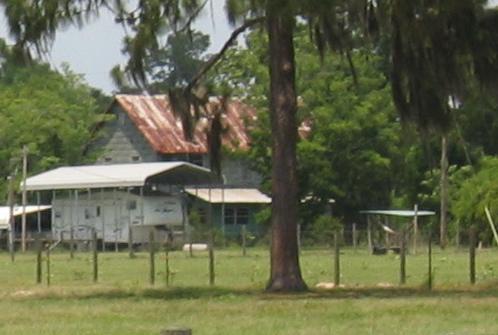
Our land is part of what was once the Alderman farm. The Alderman place was big, hundreds of acres. The original family house still stands, empty, about 100 feet east of my property line on John Mason’s land next door.

The Alderman place was broken up and sold off in the early 1970’s.

On what is now my land there were three big chicken houses, 5000 birds in each, full of laying hens. The family I bought the place from, by the name of Belk, actually worked these houses for the first few years they owned the place.

There was a building they called “the cooler” where they collected the eggs. Part of this building was a big cooler where they stored the eggs.

Across the road a big warehouse like building was used to grade and candle the eggs from the chickens here and in several other locations on the old Alderman place. Eggs were shipped from there to grocery stores all over the area. The building is still there; it has been converted into a church.

There is another “cooler” building across the road from me.

The Belks got out of the chicken business years ago and the chicken houses were torn down. The “cooler” was a more substantial building and was used for storage for some years.

As it happened, Mrs. Belks brother became ill and was moved into a nursing home. The Belks were unhappy with the care he was getting so they fixed up the “cooler” into a proper house and moved him in there. He lived here for a few years before he died.

So our place has two houses on it, the main house where my bride and myself, along with a great variety of dogs, cats, and whatever else she thinks is too cute to sleep outside, and the house that was once “the cooler”.

Now I need to give some background, I’ll get back to all this, I promise.

Some years before we moved here, we lived in Orlando Florida, yeah the place with the mouse.

My sister and one of my brothers also lived there. I have five brothers and a sister, but this was the largest concentration of siblings that existed in any one place. My mother was living in Lakeland Florida, about 60 miles west on the way to Tampa. We had no other family in Lakeland and only one brother in Tampa. We (my siblings and I) decided to gang up on mom and get her to move to Orlando where we could keep an eye on her.

We all assumed she would move in with or near my sister, which is where the grand kids are. My bride and I owned a little house near downtown that had a small guest cottage in the back yard. Mom surprised us all when she announced she wanted to live in our guest cottage.

Mom did indeed live in the cottage. She settled in, and soon had gangs of blue haired ladies she palled around with. She was chair of every committee that her church had and just generally a well integrated member of the community.

When we decided to move to the country, we assured her that she wouldn’t need to move. We planned to just rent out the house and let her stay where she was. The conventional wisdom in the family was that she wouldn’t want to go anywhere.

Much to my surprise, she wanted to come along. This wasn’t a problem but it was a surprise. Just in case you think we were trying to ditch mama, we were not. One thing for sure about my family, no one keeps their thoughts to themselves. I don’t think anyone has ever had an opinion that wasn’t communal property.

So we all moved up here and started to get settled in to our new digs.

There is an old woman who lives up the road from us, who we knew of but had not met. Her name is Mrs. Mead. One day not long after we moved in we saw a “Yard Sale” sign at Mrs. Mead’s place. My bride and I stopped in.

Mrs. Mead is 93 years old and has more energy than most twenty year olds. We introduced ourselves and she said she was glad to meet us. Then she says, “I’m told you got your Mama back there in the cooler, I’d like to meet her too”.

When I told mama this she thought it was the funniest thing she had ever heard. To this day she calls herself “The old lady in the cooler”.

Monday, February 13, 2006

Photo tour of the farm

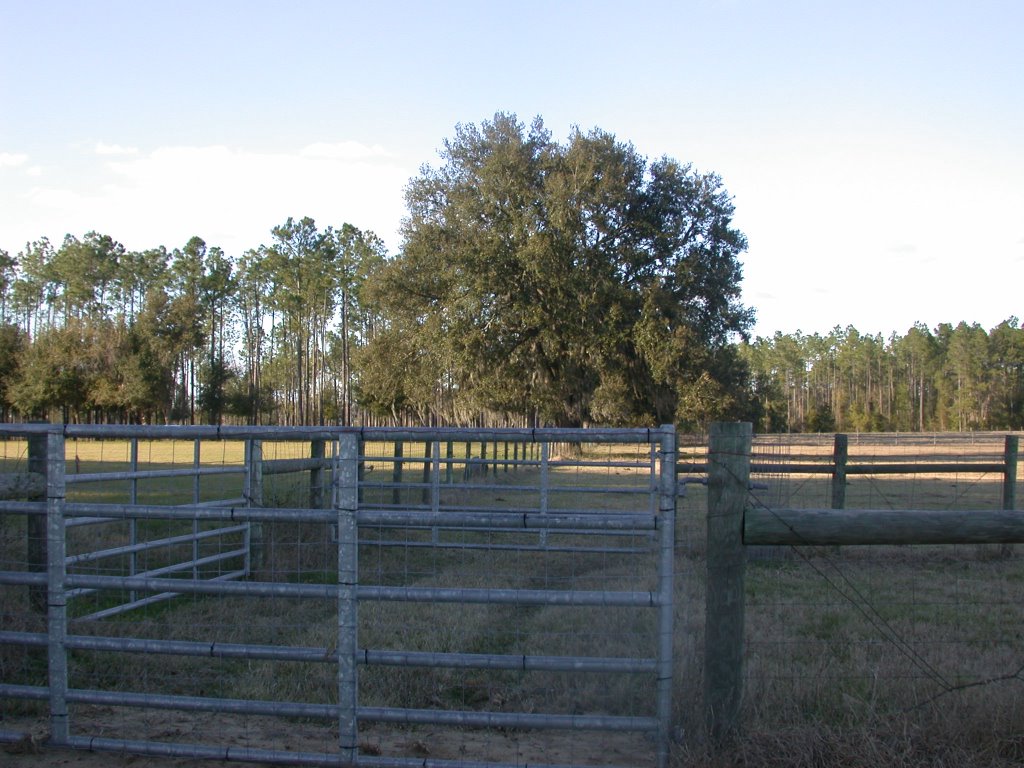
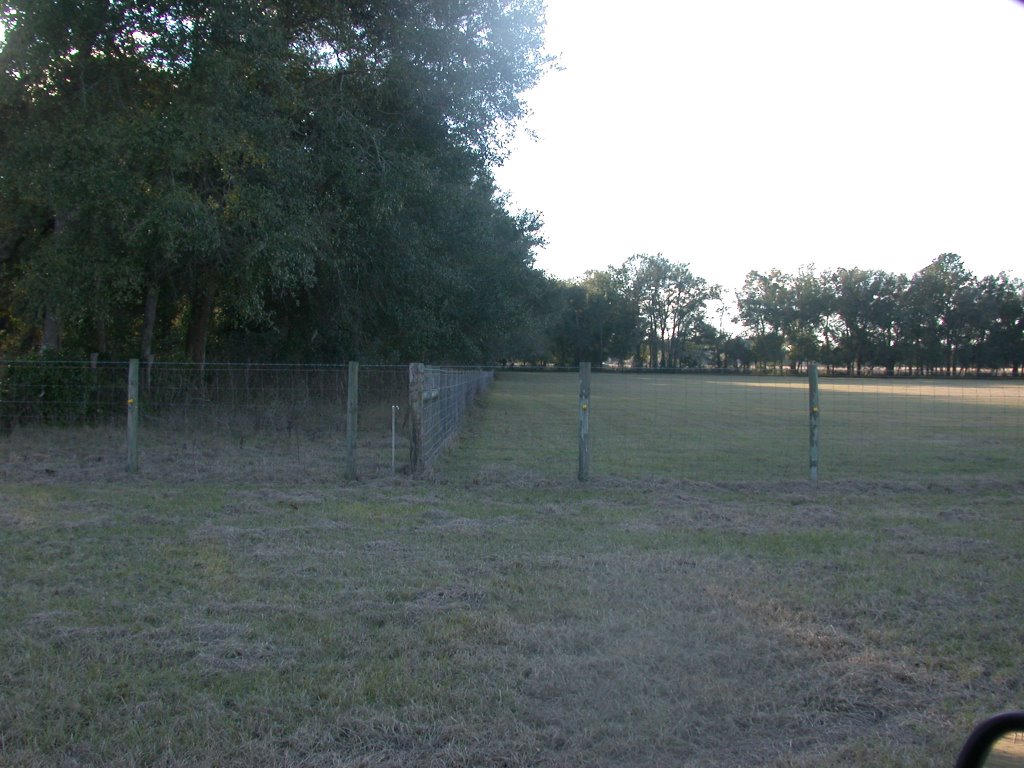
Sunday was clear, cold, and windy. I took these pictures at various times while working around the place. Just different views from around the place in no particular order.


This is from the southeast corner of the farm looking northwest.


These are from roughly the center of the farm, still looking northwest.

Looking due east towards the barn and Mom's house.


West and southwest from the middle of the place. Some of my rotational grazing fence can be seen here.

It's the reason I don't need a bass boat.

Chickens in the pasture

This weekends project was moving chickens.

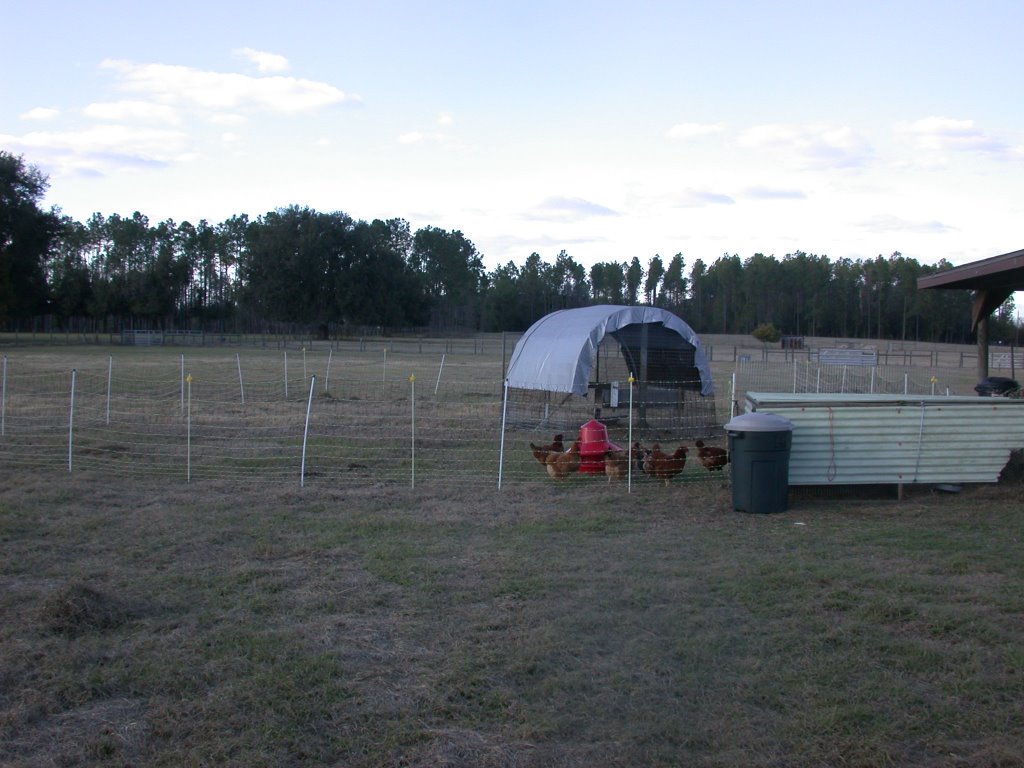
The laying hens have been plowing up my garden since last summer. I had a tiny garden patch that I was neglecting. I thought that if the chickens were nearby I would have to go feed them and collect the eggs, and perhaps I'd pull the occasional weed just from shame.

I had been dragging the small chicken pen from place to place in the pasture until then and it seemed like it would be easier to leave them in one place for a while.

I built an enclosure that was about 12' x 20' and regularly tossed in everything from table scraps, junk hay and a big pile of sheep manure and wood chips that I'd cleaned out of the barn.


Click for a larger view.

The arrangementment is my take on the "Dollar Hen" system.

Hat tip: Robert Plamondon.

The hoop house I already had but was not using for anything else at the moment. It has no floor and is just for roosting and shelter.

The small pen is just nest boxes, the top opens making collecting eggs easy. Feed and water are both outside. The fence is the electric netting from premier.

Friday, February 03, 2006

Figuring out how to do it


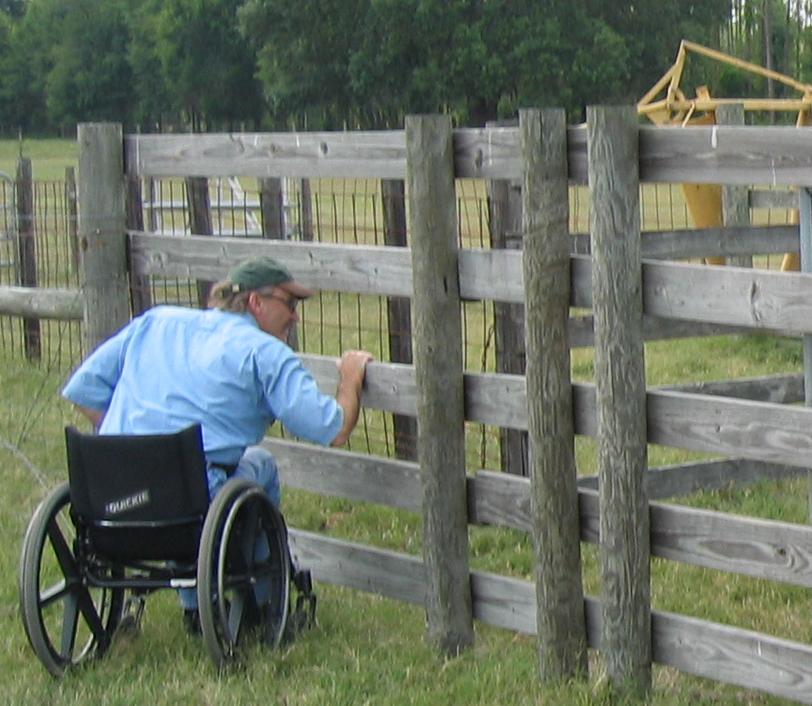
Here’s the deal, I’m a farmer and I can’t walk.

Do you know how someone who can’t walk can take care of all the chores and projects on a small farm?

Do you know how anyone, no matter their physical situation, can take care of all the chores and projects on a small farm?

First they come to the realization that it is pretty much impossible, and then they do the best they can.

How does a farmer, any farmer, turn a stand of grass into a barn full of hay? Turn a bull calf into a steer? Not by physical prowess or force of personality, I promise you.

Are you tall? Fat? Mechanically gifted or all thumbs? Can you think like a cow? Do you know what that ram is likely to do next? Yah, me either. We all have issues.

We use tools. A tractor is a tool. So is a barn. A squeeze chute for cattle is a tool. Some of these things are more or less standardized while some are completely home grown. Most are customized at least to some extent. There is a lot of science in this, but more art than science.

I’ve heard it said that it takes five years to learn to farm any given piece of ground. I wouldn’t know because I haven’t been here five years yet. This assumes that you know a lot about farming in general already, the five years is just to learn the ground.

I’m a software engineer aside from being a farmer. I can’t imagine needing five years to learn a software application, a computer language, and operating system. I’d be on food stamps. My father was a University Professor. He had a PHD. He claimed he did that because he wasn’t smart enough to be a farmer. He was joking when he said that, but only kind of, he knew the truth of it. His father was a farmer.

Is this a post about dealing with physical limitations? the complexity of farming? a how to guide for farming from a wheelchair? Yes, yes, and of course not.

If you do an internet search on farming with a disability you will find a bunch of articles on how some farmer somewhere modified some tool or piece of equipment to overcome a physical limitation. University or USDA types mostly write these articles. They go into all sorts of detail about the particulars of the adaptation. It looks to me like lots of government grant money went into this work. I can tell you exactly how many people can make use of the adaptation just as they describe it. Exactly one, the farmer that did it in the first place.

The other thing you get back from a search like that is any number of examples of how a poorly conceived adaptive device can convert a disabled farmer into a dead one. Of course one does not have to be disabled to get killed trying to farm. More than any thing else, good judgment is necessary in this line of work. Good judgment comes from experience. Experience, to often, comes from poor judgment. I’ve noticed that pretty much any time I mess up in my farming endeavors, something dies. It is best if that something is not human. It may be that forgetting ones physical limitations and failure to think a process all the way through to its conclusion is the cause of most farm accidents.

Farming is a profession firmly based in reality. It is all about life and death. I expect soldiers and cops know how this is.

So the title of this post is “Figuring out how to do it”. I’ll share what I think I know. None of this has anything to do with disability.

Every rural area I’ve ever been around has someone who is the go to guy for metal fabrication. This guy is your friend. Around here it’s Johnnie Lee at Lee’s Custom automotive in Lake Butler. It’s not just Johnnie, it’s a family business, but Johnnie’s the man. He is much like anyone who is very good at what they do; he is an enthusiast. For him an unusual project is fun.

If you need for example, hand controls for your tractor, and go to the regular implement dealer, you will just get the bums rush. If they are honest they will tell you why. If you hurt yourself using some adaptive device they make for you they are afraid you will sue them. They have a point. The tort system in general and the A.D.A. in particular have converted disabled people from potential customers into potential lawsuits.

There is a good chance that they don’t have anyone there who could help you anyway. This is a completely custom job. Tractors are all different as are all would be tractor drivers. One size does not fit all.

All good farmers need and use custom tools. It has nothing to do with disabilities. There is a whole system of rural artisans that service this need. I need these guys more than most farmers do, and a lot more than they need me.

A farm is the great cosmic gizmo. It is a living thing that is in a state of continuous change and adjustment. Small changes are best. Make a change and observe the results. Repeat as necessary.

Here is an example. I have about 20 sheep. This time of year it's good to give them some supplemental feed. I have hay, which is only just fair quality grass hay and they can also graze the pastures for whatever they can find among the dormant grasses. That gives them all the forage they need, but I decided a little more would be best. I'm feeding soy meal as a supplement.
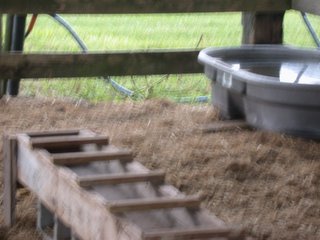
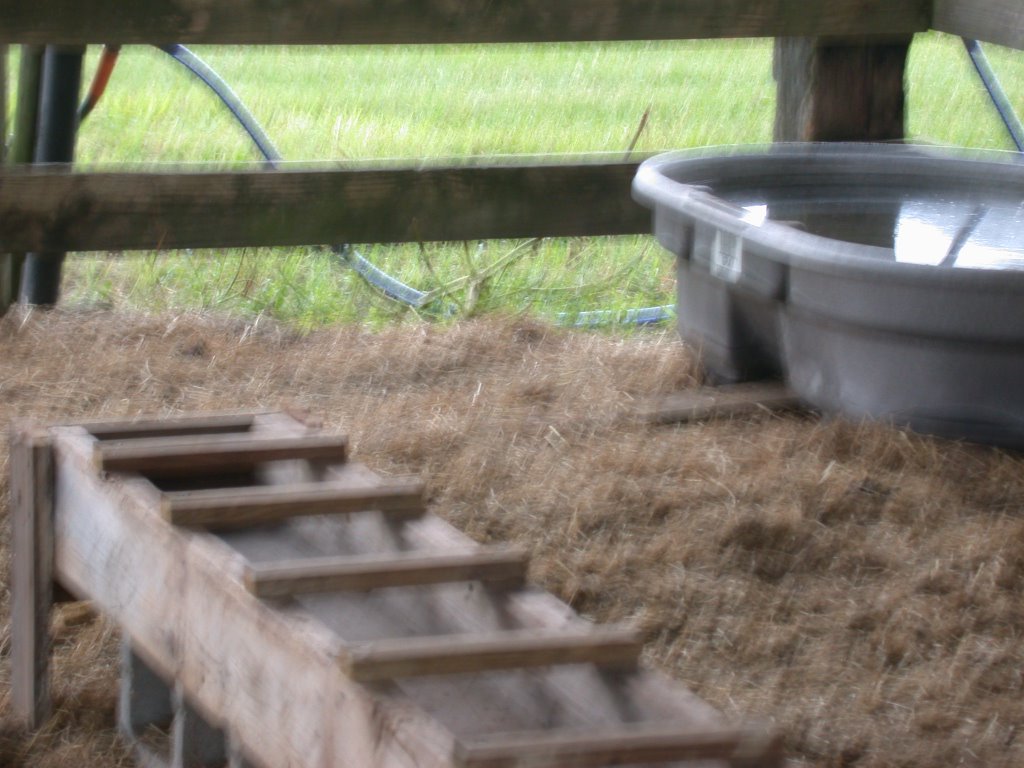
The first method was the most obvious. I put a wooden feed trough in the center of a part of the barn the sheep had access to. Because the animals could get to every side of the trough they could all eat at once. Two problems with this approach, the greedy little buggars mob me when I come in with the feed, and I end up spending quite a bit of time cleaning the manure out of the tread on my wheelchair tires. Otherwise my bride won't let me back in the house.
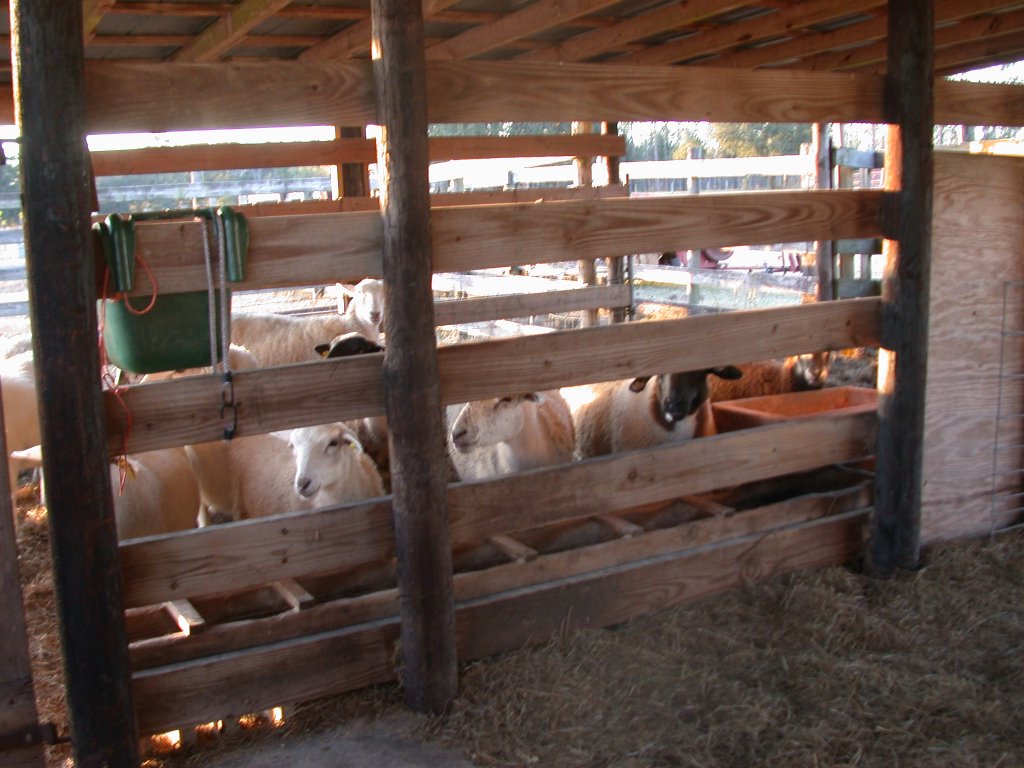
A way to feed without actually getting in with the critters started to seem like a good idea. So I moved the trough against the wall where I could fill it through the boards.

OK, new problem. Now they can't all eat at once. The more aggressive sheep eat too much, the less aggressive sheep don't get enough.

The first attempt at fixing this was to mix 30 lbs of salt with each 100 lbs of soy meal. The salt keeps the sheep from eating until the feed runs out. The aggressive sheep eat first, but they wander off before its all gone and give the other sheep a chance to eat.

Well, that's better, but it is now difficult to tell how much the sheep are being fed over all. It is possible to calculate how much a sheep should be fed at different times of the year, but it is not possible to control it this way.
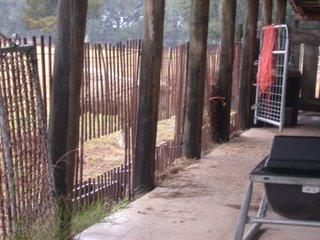
This is the current state of affairs, enough trough space for them to all eat at once, where I can feed without getting in with the sheep.

Tuesday, January 31, 2006

Paying tuition

I just spent $145.00 for tuition and got an electric fence energizer thrown in for free.

The other day my bride was working around the pump house where our fence energizer is plugged in. She set a step stool on one of the (insulated) wires from the zapper without realizing it until she heard a “pop” sound.

The meter was flat lined at the fence, but the thing was putting current out the ground wire. I pronounced the zapper as kaput and replaced it with a lower powered spare we have. The fence tested OK, with less zap of course. I ordered a replacement charger.

The new charger came and I installed it today.

I hooked it up and tested it. The fence was dead and current was pumping out the ground wire. I fussed and swore and looked around for something out of place. I found it. The grounding wire was pulled loose from the grounding rod, hidden by the tall grass behind the pump house. As soon as I saw it I knew what had happened. My bride had set the step stool on the ground wire. The “pop” she heard was the wire pulling loose from the ground rod. It was still in contact (sort of) with the ground rod there in the tall grass where it was hard to see, just no longer well connected.

I had never heard of a charger sending current down a disconnected or poorly connected ground rod. Apparently when I put in the spare unit it was connected enough to give me a reading on the meter. Our stock is well trained to the electric fences and just never had any occasion to test it in the time it took for the new unit to arrive.

I now have a very nice spare zapper, and a new bit of knowledge; always check the ground, even when you are sure you know what the problem is.

Papa would often say “You paid the tuition, be sure you learned the lesson”.

Monday, January 30, 2006

Release the hounds!

One of the projects that have been going on longer than seems reasonable is making the fences around here dog tight. This is to keep dog in, not out. The dogs we have on the inside will keep other dogs on the outside.

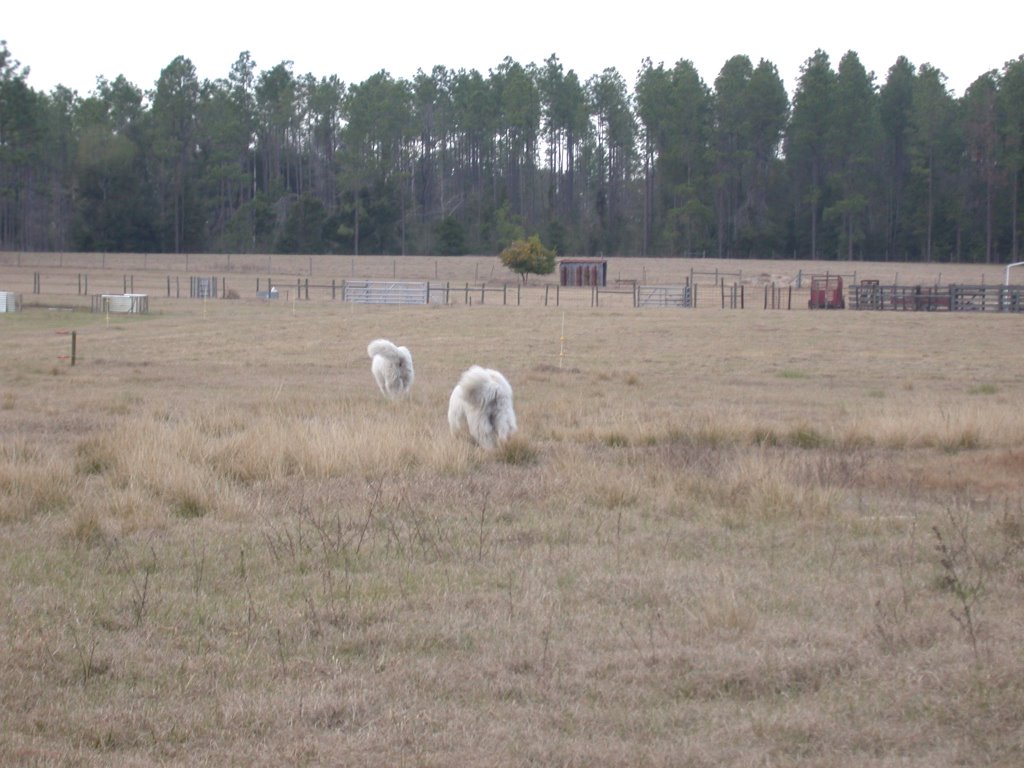
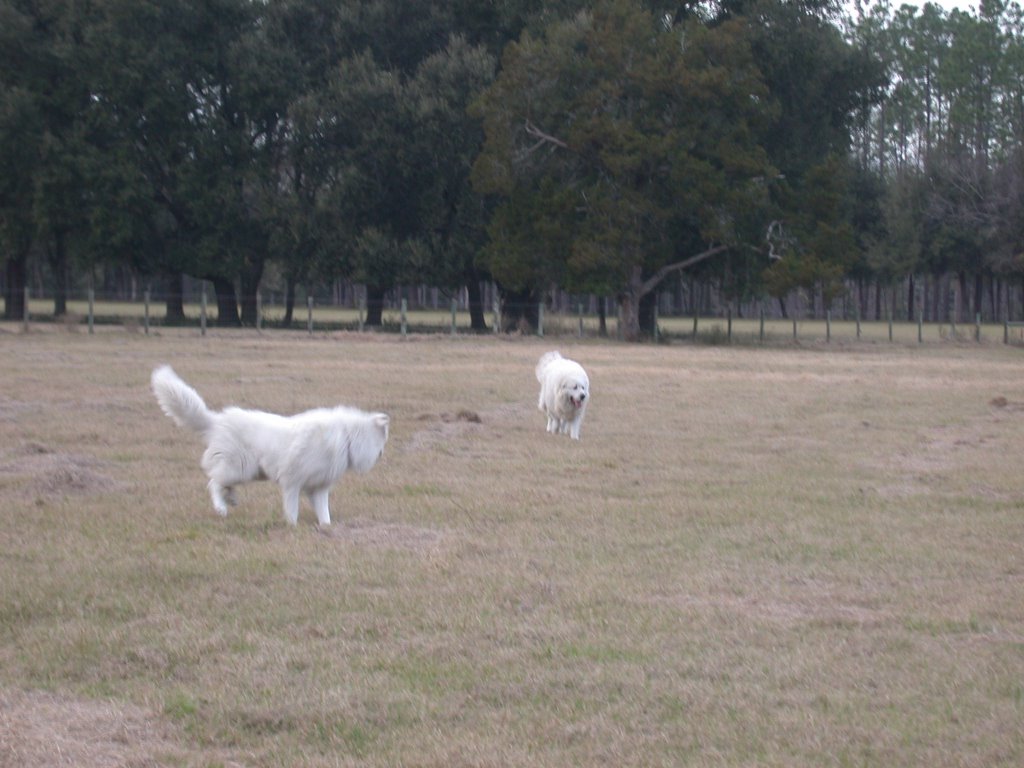
Our dogs, Bo (Bocephus, like Hank Jr.) and Sarah are Great Pyrenees brand woofers that have been willing and eager to patrol their territory since they moved in here about a year ago.

The problem is that they believe that their territory includes quite a bit of ground that does not belong to us. This brings us back to dog tight fences. We don't have the whole place dog tight yet, but we did finish the front pasture, and area of about 10 acres.


The third photo here shows the small building I have fixed up for cleaning chickens. No broiler are growing now, the laying hens are elsewhere on the farm.


After the last fence fixing Saturday we set the beasties loose. They have been here many times before of course, but it was never safe to let them off a lead, they would just slipp under a gate and go explore.

We still have not left them out unsupervised, but the goal is to turn them out at night so they can guard the stock, and let them in the house or the yard to snooze during the day.

Sunday was spent finishing (or nearly so) brush hog work around the place. I know it's January, but this is the deep south. The thing that struck me was the birds. I don't have pictures because I was on the tractor but it was interesting.

First was the egrets. Any time I cut grass I get followed around by egrets. They hang around the tractor to eat the bugs that get stirred up, mostly grasshoppers. They move like s school of fish, all together in a group.

A half a dozen crows also showed up. We don't have crows in huge numbers like they do in some places. I approve of crows because they tend to harasss the hawks which we do have in large numbers. The hawks like to eat young chickens.

Next was a pair of kestrels that have been hanging out lately. One sat for a long while on a fence post just watching the show. Looking for a rat or a snake no doubt.

Then there are bluebirds. The old cedar tree in the fence line (2nd picture) contained a cloud of them, like about 20. I never knew that bluebirds hung out in big groups like that, but my bride has been encouraging them and now we have gangs of them.

Tuesday, January 24, 2006

Thoughts on National Animal Identification System - NAIS

I was watching a thing on TV a while back where an executive of one of the big agribusiness companies explained why the proposed NAIS is a wonderful idea. He was from Cargill if I recall correctly. This guy was going over the issue with a land grant University Ag department type. It was sort of like an infomercial. I don’t mean to pick on Cargill, there are several such companies and I presume they all have more or less the same point of view.

I learned a few things that I did not know previously. They pointed out that this whole scheme was in the works before mad cow disease and bird flu made the news and was not inspired by them. I had never heard of NAIS before mad cow got so much attention and without thinking about it assumed one was a response to the other.

They did of course mention terrorists and disease tracking but did not point out a single case where a real problem could have been prevented by such a system. Clearly this is a proposal to regulate commerce, not a health or law enforcement measure.

I can only paraphrase the conversation but I believe I got the basic idea. It went like this:

“It used to be that our food came from just a few miles away, now it can come from the other side of the country or even the other side of the planet. People want to know where there food comes from, how it was raised and what it was feed.”

These guys were talking were talking about beef of course. NAIS covers most other species as well but these guys didn’t discuss anything but beef.

I certainly agree that many people do want to know where their food comes from. Probably not most people, but still many people.

They mentioned that some large customers were offering a premium price to sellers who could source verify there product. McDonalds was the example they used. The problem was that they could not get all they wanted from producers who could source verify.

This is as far as this topic went. There was no speculation as to what the effect of offering a larger premium would have on supply.

The unspoken assumption that these guys were making is I think the same one made by the USDA and State government types, which is there is only one-way beef is produced.

Lots of small and not so small cow calf operators, scattered all over the country sell calves to big feed lots in Texas, Oklahoma, and Kansas. They supply the big meat packers, who in turn supply the big grocery store chains.

This is indeed how most beef is raised, but not anything like all of it. Here is (at least some) of where they are leaving out.

At the edges of most any city or suburb are lots of small holders. They have a few acres, typically between 10 and 50. Most of these small holders don’t make a living by farming but they do keep some stock. They do this for a number of reasons, not the least of which is that it gives them a BIG break on their property taxes. I know because I’m one of these small holders.

Finishing a calf does not require a PHD in agronomics. Just give it come grain along with the pasture forage and watch it get fat and slick. Some people prefer to finish them on grass. This is doable most of the year if the genetics are right. This cost more than Cargill spends per head of course, but not needing to truck the beast to Oklahoma and support the folks at the feedlot, packing plant and supermarket means the seller can make a profit by selling for less per pound than the supermarket charges. Most folks can’t store a whole beef of course but they can easily store a half or a split half. Home Depot and such places sell a lot of freezers, they don’t cost that much.

There is no need to spend a lot of time looking for customers. The last time I had more beef than buyers I just mentioned it to the old guy who owns the local feed store. He put a note on this bulletin board and it was quickly spoken for.

The consumer, this person who wants to know more about where their food comes from typically lives within a few miles. They often want to come by the place and look it over. The calf she wants to buy a portion of was born here. There’s its mama. Its daddy is the big bull across the road. His name is “Turbo” and if you feed him a loaf of bread he’ll let you scratch his head.

The butcher shop is close by. Locally there are three or four good ones. They are not USDA facilities they are state inspected. Most of the time they process deer for hunters and 4H animals from the county fair, but as long as deer season is over and the fair is not going on they are happy to butcher a steer any way you want. I have a trailer I can use to transport animals, but it is easy to hire it done. The customer picks it up at the butcher.

I don’t know how much of this goes on, but I do know that around here at least thousands of people do it. I would suggest that the big Ag companies and the USDA also have no idea how much of this goes on. No one measures this, and probably no one should, it is the free market at work and the business only of those involved. The consumer who cares about where their food comes from can find out, get a superior product, and spend less for it. The butcher and the feed store guy each make a few dollars, as does the small holder.

Cargill can’t compete with this, if for no other reason than they don’t even seem to be aware that it is going on. What the NAIS seems bound to do, intentionally or not, is to limit consumer choice and erode the competitive advantage of the small holder in favor of very large corporations and even larger government entities.

For this reason I believe it is a bad idea.

Monday, January 23, 2006

Farming and the apocalypse

I’ve notice that many people seem to associate farming with some possible apocalyptic future. I don’t mean agribusiness, I mean small-scale “homesteader” type farming.

No one has ever suggested to me that doing this sort of thing will cause civilization to come to a bad end, but rather that personally raising lots of animals and vegetables is somehow part of preparing for some sort of “Mad Max beyond the thunder dome” post nuclear future.

I raise several batches of broiler chickens each year. I butcher them here on the farm and insist that people that want to buy them come to the farm and pick them up. I do it this way because I think I can raise a better bird that the Tyson’s people, but I know I can’t compete with them in materials handling and packaging, so I don’t try.

I generally clean birds in the morning and have folks come in the afternoon to get them, having arranged that well in advance. They bring coolers and we pull them right out of the chill tank.

New customers almost always make some sort of “Come the revolution, you’ll be all set” sort of comment. I don’t do this to prepare for the end of the industrial age of course, I do it because I enjoy it and to make money.

Cowboys are not a dieing breed, they’re just real hard to see from the highway.”
Baxter Black

I also know (and know of) traditional family farmers shifting from “cash grain” operations to some sort of low input cost, direct or niche marketing operation.

This can sometimes be a rather desperate attempt to preserve several generations of tradition by changing nearly everything about the family farm. Attempting to avoid a catastrophe that is no less real for being aimed at one clan rather than a whole culture.

It’s not the changes that usually cause the strain but the putting them off for so long.

Also I enjoy reading and dealing with the “Christian Agrarian” folks. I have nothing but respect for these folks, they make the best of neighbors and making a handshake deal with them gives you something more solid that most corporate mergers.

If I were a more serious fellow, I’d be one of them. Maybe I will be when (and if) I grow up, but I don’t think my “lapsed Catholic hobby farmer” is quite the same thing.

The point I’m trying to make is that for me this sort of independent rural “kill it and grill it” lifestyle is not something to be done when or in case the output of MRE's from the modern world is interrupted. I do it because I can. Because I prefer it.

Lever gun

Santa brought me a Winchester lever action carbine in 357 magnum for Christmas.
I just ordered a peep sight for it and intend to find a home for it somewhere in my pickup truck.

This is the one: Brownells

After getting some advice from PawPaw's House: Reader Mail, I finally got off the mark and placed the order.

My big rifle (Remington 742 in 30.06) has a low power scope on it. This is my favorite setup usually. Set up far forward per Jeff Cooper. I have a .22 plinker set up the same way, lots of fun.

I also have a little Marlin Papoose with conventional iron sites. It’s a good little gun but I can’t set any marksmanship records with it. I don’t shoot this one as often as the others.

I’ve only used a peep sight lever gun one time, a while back a fellow at the range let me try his. Fun.

My rationalization for this new toy is an on again off again war I have going with the local raccoons and one “wily coyote” that I (any my neighbors on both sides) have been trying to assassinate for the last two years. The coyote has gone completely nocturnal, and just when we decide he’s moved in with Osama, he shows back up.

The raccoons just love to snack on chickens when they are young. They prefer the heads. The goal seems to be to cause as much carnage and make as big a mess as possible.

Anyway, this little carbine is just 33 inches long over all. The beasties seldom get close enough for a pistol and won’t hang out long enough for me to go the house and get something bigger. When I’m working around the place the pickup is usually somewhere close.

I’m glad to have these varmints around; if it weren’t for them I’d need to make up some other excuse to play with these toys :-).

Sunday, January 22, 2006

Desiccation

I was out on the tractor yesterday cutting a paddock that I had not gotten around to since the stock was last there in November some time.

The sward has shrunk down considerably just standing there. I did the cutting a full gear faster than I would have been able to in November. This is North Florida. We have had frost about three times this year, but no hard freezes yet.

The grass pretty much quit growing in mid October. The weeds are another story. Last year I cut the dormant grass sward and pulled a drag harrow over the ground to break up the cow and horse piles. When the grass did start growing in the spring it came up so lush and green that several neighbors ask me if I had put down fertilizer. I think I’ll drag it again this year as much as time allows.

By the way, we have several ornamental citrus trees on the place that have put out an incredible amount of fruit. Cows think oranges and tangerines are delicious. I never would have guessed but a friend clewed me in.

Most of the sheep like them too, but they had not been given any before. This means that while they are still trying to figure out what to do with it, one of the cows comes by and eats it up. Oh well, we have lots of oranges.

Friday, January 20, 2006

Handling facilities for sheep

There was a time when we worked about 3000 head with gates and T posts slapped together in whatever way seemed to make the most sense at the time, that and three healthy 20 year olds, two good horses and one extremely good dog.

Well, that was the far bank of a wide river of time. Here and now, one crippled fifty year old with occasional help from his bride needs to handle a small flock for the usual reasons. Worming, shearing, hoof trimming, vaccinations, and general doctoring.

The main idea that was used to handle a large number of sheep with minimal facilities was to crowd them together so they couldn’t move, then grab one and physically hold it so it could be worked on.

At first there were no facilities on the place, so we did just about the same thing, crowded them into a small pen and physically grabbed them. This works way better when 20 year olds do the grabbing, rather thank fifty year olds.

Then we set up a simple funnel shaped pen out of hog panels. A makeshift head gate was at the small end. This was not much better than nothing. Even a good head gate is less helpful with sheep than it is with cattle.

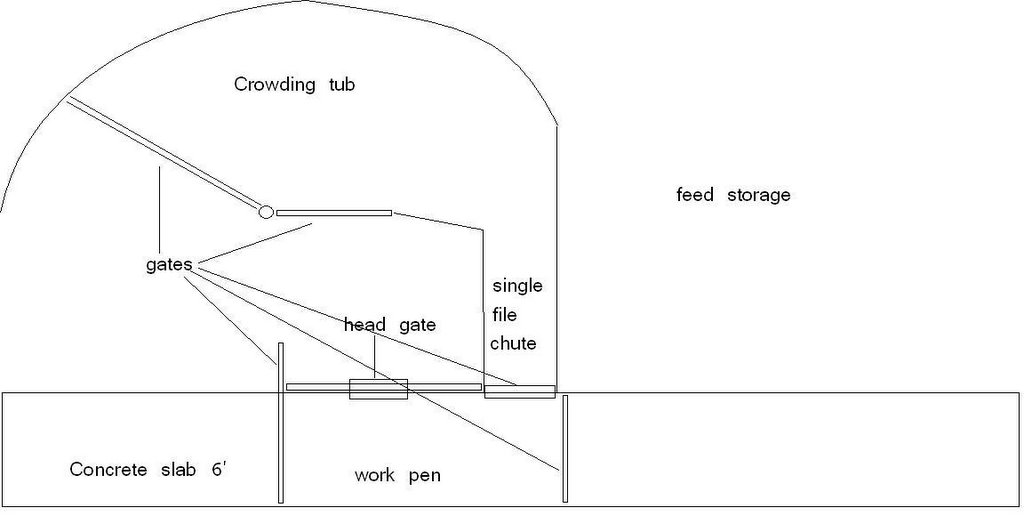
The next level of upgrade is what we have now. It is far from perfect but it is much better. Here is a diagram:


Rather than being designed this facility sort of “growed there”. It was mostly constructed from materials that were on hand.

Keep in mind that I am a strong paraplegic, wheelchair and all. Being able to do most of the work on a solid surface is important.
I get the beasties into the crowding tub through the small gate with a bribe of some shelled corn. Then I use the big gate to crowd them together.

The gate between the single file chute and the work pen is open. When one animal goes into the work chute the gate is closed, either by a helper (yes, dear), or I can use a Shepard’s crook to do it from outside the work pen. There is usually a small amount of corn in a bucket is the work pen to occupy the sheep while I get back in.

The sheep chooses which corner to hide in and I grab it. If I need to do much with it, the first thing I do is put a rope halter on it. I generally just hold it against my chest (give it a hug) and check it’s eyes and worm it. I keep tools and equipment in a bucket hanging on the wall where I can reach it from anywhere in the pen but the animals can’t knock it over.

I can put it’s head in the head gate if I need to. I do that to shear them for example.

To trim the front hoofs, I lift it up enough to set the front half of the beast in my lap. This makes the front hoofs easy to trim. I have yet to devise a way to trim the rear hoof that does not involve getting kicked senseless much of the time.

Monday, September 12, 2005

Have you Noticed?

Have you noticed that for every farmer out there , there seems to any number of bureaucrats, consultants and what ever.

I was just looking around the web for farm related blogs and came up with everything but.

People writing about farm policy (explain that to the sheep), organic certification (filling in forms morfs crops into "organic" crops, near as I can tell).

I did find one or two blogs that looked like they were written by farmers but the subject matter was politics or whatever else. Nothing wrong with that, I'm doing it myself with this post, but it makes me wonder a bit.

Friday, September 09, 2005

From Scratch

In some ways I'm starting this farm from scratch. The starting point was very nice indeed, good land, good fences, house, barn, machine shed, shop; all fine buildings. But empty.

No stock. No equipment. No spare parts. No piles of scrap, leftover this and that to use to patch up a broken widget.

This is intended to be an observation rather than a complaint. I knew what I was getting into, well sort of anyway.

Every production farm I've ever been around has it's own momentum. It has a basic production cycle that it has been through many times before. Of course it changes over time, but from year to year it is much the same.

This farm has been run as a cow calf operation until a year or so before we bought it. It is a small place, it supported 20 mama cows and a bull, plus the calves of course. The man who ran it, part time mostly, for 30 some years was nearly 80 and just couldn't do it any more. He took very good care of the place. When they sold it to us they cleaned it up and took all their stuff. There was not so much as a bent nail left behind.

I have my own ideas of how I want to farm. They range from firm plans to vague notions of what I might like.

I had quite a lot of farming experience as a teenager; my dad's 100+- head cow calf operation; some time on a 3000+- head open range sheep operation; several years of working for the Vet part time, going from farm to farm and holding down the critters while he did awful things to them.

But I was a teenager a very long time ago. Now here I am, fat, fifty and rather crippled. I'm learning more each day about just how much I don't know.

The plan has been to try things on a small scale. To learn as I go. To set up the needed infrastructure as I go.

I am very fortunate that I don't need to make a living at this, my family would probably starve, or at least eat all the livestock before I learned to care for them properly. I intend to get the farm operation above break even, but it will be awhile.

My joke (that I swiped from somewhere) is that I know how to make a small fortune in farming, just start with a large fortune.

So far we have a small heard of sheep, two heifer calves, a very sway backed old mare, some laying hens, and a new batch of broilers in the brooder.

For the mixed mob of ruminants (plus Gracey the guard horse) I divided the four pastures into ten paddocks with electric twine that average 2 1/2 to 3 acres each. All have good grass, shade and water. I've set up simple handling facilities for the sheep in the barn. It works OK but needs improvement. I have a second hand head gate for the cattle leaning against the fence, ready to install at the end of an existing alley just as soon as I get time.

For the laying hens I've built a shelter next to my little vegetable garden, I intend to move it in a year of so and use the spot where it is as the world's best pumpkin patch. For the broilers I converted a small building to use as a brooder/processing facility. I have an open bottom pen where they will spend the weeks between the brooder and the freezer. I have an almost done Whizbang plucker under construction in the shop.

I don't have to much in the way of machinery, but I've set up a small tractor with a bucket loader and a mower. I came across a Hay baler that is nearly as old as I am, and with the help of an 79 year old retired farmer I know, actually got it to make hay.

I'm sure that folks that observe this foolishness are sure that I'm nuts or worse, but the fact is, I've never has so much fun in all my life.

Let's try this again

It has been a very long time since I've done a post, but I've decided to give it another shot. I see it's been over a year, wow!

I am inspired by several blogs I've gotten into the habit of reading lately. I'll add links to them as soon as I figure out how.